

AI Overview
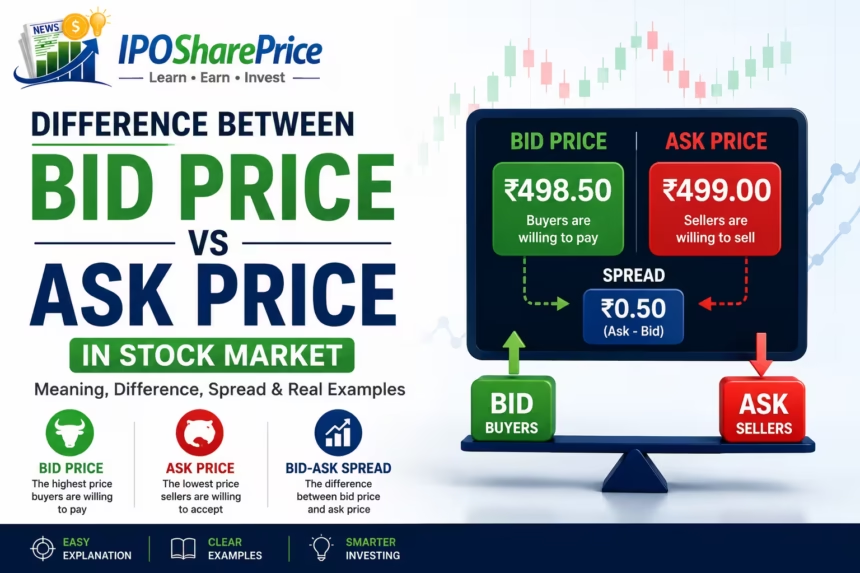
Bid price vs ask price:
- Bid price: The highest price a buyer is currently willing to pay for a stock
- Ask price (offer price): The lowest price a seller is currently willing to accept
- Bid-ask spread: The difference between ask and bid this is the implicit transaction cost of trading
When you place a market buy order, you pay the ask price. When you place a market sell order, you receive the bid price. The spread is the profit captured by market makers or liquidity providers.
Example: Bid ₹498, Ask ₹500 → Spread = ₹2 (0.4%)
Introduction: Two Prices Every Stock Has at Every Moment
When you look up any stock on NSE or BSE, you see one price the last traded price. But the stock actually has two live prices at all times: the bid and the ask.
Every time you click “Buy” or “Sell,” understanding bid and ask determines exactly what price you get and how much you pay in implicit transaction costs beyond brokerage.
What Is the Bid Price?
The bid price is the highest price that a buyer in the market is currently willing to pay for a stock.
It represents active demand real money waiting to buy shares at that price.
Example: If the bid for Infosys is ₹1,745, there is at least one buyer willing to purchase shares at exactly ₹1,745 right now.
If you want to sell your Infosys shares immediately, ₹1,745 is the price you will receive (assuming sufficient quantity at that level).
What Is the Ask Price (Offer Price)?
The ask price (also called the offer price) is the lowest price that a seller is currently willing to accept for a stock.
It represents active supply real shares available for purchase at that price.
Example: If the ask for Infosys is ₹1,747, there is at least one seller willing to sell shares at exactly ₹1,747 right now.
If you want to buy Infosys shares immediately, ₹1,747 is the price you will pay (assuming sufficient quantity at that level).
What Is the Bid-Ask Spread?
The bid-ask spread is the difference between the ask price and the bid price:
Spread = Ask Price – Bid Price
Example:
- Bid: ₹1,745
- Ask: ₹1,747
- Spread: ₹2
This ₹2 spread is the implicit cost of round-trip trading (buying and immediately selling). If you buy at ₹1,747 and immediately sell at ₹1,745, you lose ₹2 per share even before brokerage.
Spread as a percentage:
Spread % = (Spread ÷ Ask Price) × 100
For the above example: (₹2 ÷ ₹1,747) × 100 = 0.11%
Why Does the Bid-Ask Spread Exist?
The spread compensates market makers and liquidity providers for the risk of holding positions and the service of providing continuous two-sided quotes. In India’s equity markets, much of this function is served by proprietary trading firms and algorithmic traders who continuously post bid and ask orders to earn the spread.
The spread also reflects:
- Liquidity: Highly liquid large-cap stocks (Reliance, TCS, HDFC Bank) have very tight spreads often ₹0.05 to ₹0.50. Illiquid small-cap or SME stocks can have spreads of ₹5 to ₹50 or more.
- Volatility: During periods of high market volatility (budget day, RBI policy announcements, global sell-offs), spreads widen as market makers increase their risk premium.
- Market hours: Pre-open sessions and the first/last minutes of trading typically have wider spreads than the middle of the trading day.
Bid-Ask Spread in Large Cap vs Small Cap Stocks
| Stock Type | Typical Spread | Typical Spread % |
| Large-cap (Nifty 50) | ₹0.05 – ₹1 | 0.01% – 0.1% |
| Mid-cap | ₹0.50 – ₹5 | 0.05% – 0.3% |
| Small-cap | ₹1 – ₹20 | 0.1% – 1% |
| SME / illiquid stocks | ₹5 – ₹100+ | 0.5% – 5%+ |
For small-cap and SME stocks, the spread can become a significant transaction cost especially for short-term traders who enter and exit frequently.
How Bid and Ask Affect Your Orders
Market Order
A market order executes immediately at the best available price:
- Buy market order → executes at the ask price (the lowest available seller)
- Sell market order → executes at the bid price (the highest available buyer)
You get immediate execution but accept the spread as a cost.
Limit Order
A limit order specifies the price you are willing to pay or accept:
- Buy limit order → you specify a maximum price (typically at or below ask)
- Sell limit order → you specify a minimum price (typically at or above bid)
You may not get immediate execution, but you control the price and avoid the spread if the market comes to you.
Example buying 100 shares of Stock ABC:
- Bid: ₹500, Ask: ₹502
- Market buy order: You pay ₹502 (ask price)
- Limit buy at ₹501: You wait if a seller agrees to ₹501, you execute; otherwise the order stays open
Where to See Bid and Ask on NSE/BSE
On NSE’s trading platform and most broker apps (Zerodha Kite, Upstox, Angel One), you can see:
Level 1 data: Shows the best bid and ask with their quantities. Market Depth (Level 2 data): Shows the top 5 bids and top 5 asks, with quantities at each price level. This is also called the order book.
See our Market Depth guide for a complete explanation of how to read and use this data.
Practical Implications for IPO Investors
For IPO allottees selling on listing day:
On listing morning, before 9:45 AM, NSE runs a special call auction (pre-open session). During this period:
- Multiple bid and ask orders accumulate
- The exchange finds a single price that clears maximum volume the discovered listing price
After 9:45 AM, continuous trading begins. The bid-ask spread in IPO stocks on listing morning is often wider than normal especially for smaller IPOs because liquidity is being established for the first time.
Practical tip for listing day sellers: Use limit orders rather than market orders when selling IPO shares on listing morning. Market orders during wide-spread periods can result in execution significantly below the listed price.
Frequently Asked Questions
When I place a buy order at market price, which price do I pay bid or ask?
You pay the ask price. This is the price at which sellers are willing to sell. Your market buy order matches against existing sell orders starting from the lowest ask.
Is the “last traded price” the bid or ask?
Neither. The last traded price is the price of the most recently executed trade which could have been at the bid, ask, or anywhere in between, depending on how it was matched.
Why is the spread larger for small-cap stocks?
Thin liquidity means fewer buyers and sellers at any given moment. Market makers demand a larger spread to compensate for the risk of holding positions in stocks that are difficult to exit quickly.
How does a large spread affect my trading costs?
A 1% spread means you lose 1% just by buying and immediately selling. For an active day trader doing 10 round trips per day in such a stock, spread costs alone would be 10% of capital devastating.
Can I see real-time bid and ask on Zerodha?
Yes. In Zerodha Kite, the market depth panel shows live bid and ask quantities at each price level. Click the down-arrow icon on any stock in your watchlist to open market depth.
Summary
- Bid price = highest price buyers will pay; Ask price = lowest price sellers will accept
- Bid-ask spread = Ask – Bid = the implicit cost of round-trip trading
- Market buy orders execute at the ask; market sell orders execute at the bid
- Tight spreads in large-caps (₹0.05–₹1); wide spreads in illiquid small-caps (₹5–₹100+)
- Use limit orders in illiquid or volatile stocks to avoid paying excessive spread
- Spread widens during volatile market conditions and at market open/close