


AI Overview
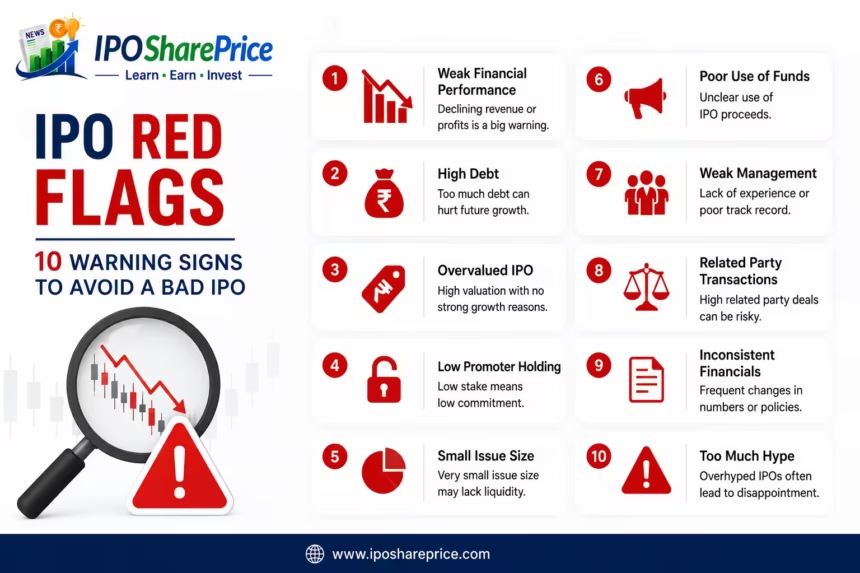
10 IPO red flags to check before applying:
- High OFS, minimal fresh issue (promoters exiting)
- Company reporting losses or declining revenue
- Overvaluation vs listed peers (P/E too high)
- Promoters selling most of their stake
- High related party transactions
- Single-customer revenue concentration
- Regulatory or SEBI actions against promoters
- High debt with poor interest coverage
- No clear use of IPO proceeds
- Peer companies trading at much lower valuations
Introduction: Most IPO Losses Are Avoidable
The most common reason retail investors lose money in IPOs is not bad luck — it is skipping the fundamentals and applying based solely on GMP or subscription numbers.
The DRHP discloses everything. The red flags are all there — in the financials, in the risk section, in the use of proceeds. You just have to know where to look and what to look for.
This guide covers 10 specific red flags that, when present, significantly increase the risk of a poor IPO investment.
Red Flag 1: Mostly OFS, Minimal Fresh Issue
What to check: Objects of the Issue section in the DRHP.
If 70–90% of the IPO is Offer for Sale, existing shareholders are using your money to exit — not grow the business. The company itself gets little or nothing.
This is not automatically disqualifying (PE fund exits are common and legitimate), but combined with other red flags, a high OFS percentage is a serious concern.
Threshold: If OFS exceeds 70% and the company has not demonstrated strong profitability, be cautious.
Red Flag 2: Declining Revenue in the Most Recent Year
What to check: Restated financial statements (3-year revenue trend).
A company that has been declining revenue right before its IPO is either timing the offering to catch a valuation peak or hiding structural problems.
Window-dressing is common — companies time IPOs after their best quarters. If the annual trend shows revenue decline after 2 years of growth, dig deeper.
Red Flag 3: Severe Overvaluation vs Listed Peers
What to check: P/E ratio vs sector average.
If the IPO P/E is 2x–3x the sector average without a compelling reason (patent-protected niche, exceptional growth rate, unique market position), the stock will likely correct post-listing once speculative enthusiasm fades.
See our P/E Ratio in IPO guide for how to make this comparison.
Red Flag 4: Promoters Selling Large Stake
What to check: Post-IPO promoter holding vs pre-IPO promoter holding.
If promoters are selling 30–40%+ of their personal stake through OFS, it raises a simple question: if they believe in this business, why are they exiting now at this price?
Legitimate answers exist (regulatory requirement to reduce stake below 75%, wealth diversification). But selling 50%+ of a promoter’s own stake at IPO is a meaningful caution signal.
Red Flag 5: High Related Party Transactions
What to check: Related Party Transactions note in financials.
Large payments to promoter-owned entities — for rent, services, loans — can indicate fund siphoning or governance problems. A related party transaction ratio above 15–20% of revenue warrants investigation into what exactly these transactions represent.
Red Flag 6: Single-Customer Revenue Concentration
What to check: Business description and risk factors.
If one customer contributes 30%+ of revenue, losing that customer would be catastrophic. SEBI requires this to be disclosed in risk factors — look for language like “a significant portion of our revenues come from [customer name / type].”
Red Flag 7: Promoter Legal Issues or SEBI Action
What to check: Outstanding litigation section + SEBI enforcement orders database.
Any history of SEBI action against promoters — insider trading, disclosure violations, manipulation — is a governance red flag. Also check for: income tax disputes, criminal proceedings, and civil litigation from former business partners or employees.
Red Flag 8: High Debt with Poor Interest Coverage
What to check: Balance sheet and interest coverage ratio.
Interest coverage ratio = EBIT ÷ Interest Expense
A ratio below 2x means the company is paying more than half its operating profit just to service debt — precarious. An IPO where the stated use of proceeds is “debt repayment” may help, but understand why the debt exists first.
Red Flag 9: Vague or Implausible Use of Proceeds
What to check: Objects of the Issue.
Uses of proceeds should be specific: “₹150 crore for expansion of manufacturing facility at [location]” with project costs attached. Red flags:
- Large allocations to “General Corporate Purposes” (GCP) — SEBI limits GCP to 25% of total issue size, but even this limit allows significant flexibility for unspecified spending
- No specific project costs or timelines mentioned
- All proceeds going to working capital without a clear business rationale
Red Flag 10: No Profitability Path for Loss-Making IPOs
What to check: Management Discussion and Analysis (MD&A) section.
Loss-making IPOs are not automatically bad — many great companies IPO’d before reaching profitability. But the management should articulate a clear, credible path to profitability: what milestone triggers it, what scale is needed, what unit economics look like at maturity.
If the DRHP’s loss-making company cannot explain when or how it becomes profitable, applying is speculation, not investment.
Frequently Asked Questions
Should I avoid all IPOs with OFS?
No. OFS is present in almost every IPO. The question is proportion and context. High OFS combined with other red flags (losses, high debt, declining revenue) is the real warning — not OFS alone.
Are SME IPOs more likely to have red flags?
Yes, statistically. Lower SEBI compliance requirements for SME IPOs mean less scrutiny. SME IPOs require extra diligence on the DRHP.
Can an IPO have red flags but still list well?
Yes, especially in bull markets. But strong listing gains despite red flags are market-driven, not fundamental-driven — the risk of post-listing correction is significantly higher.